
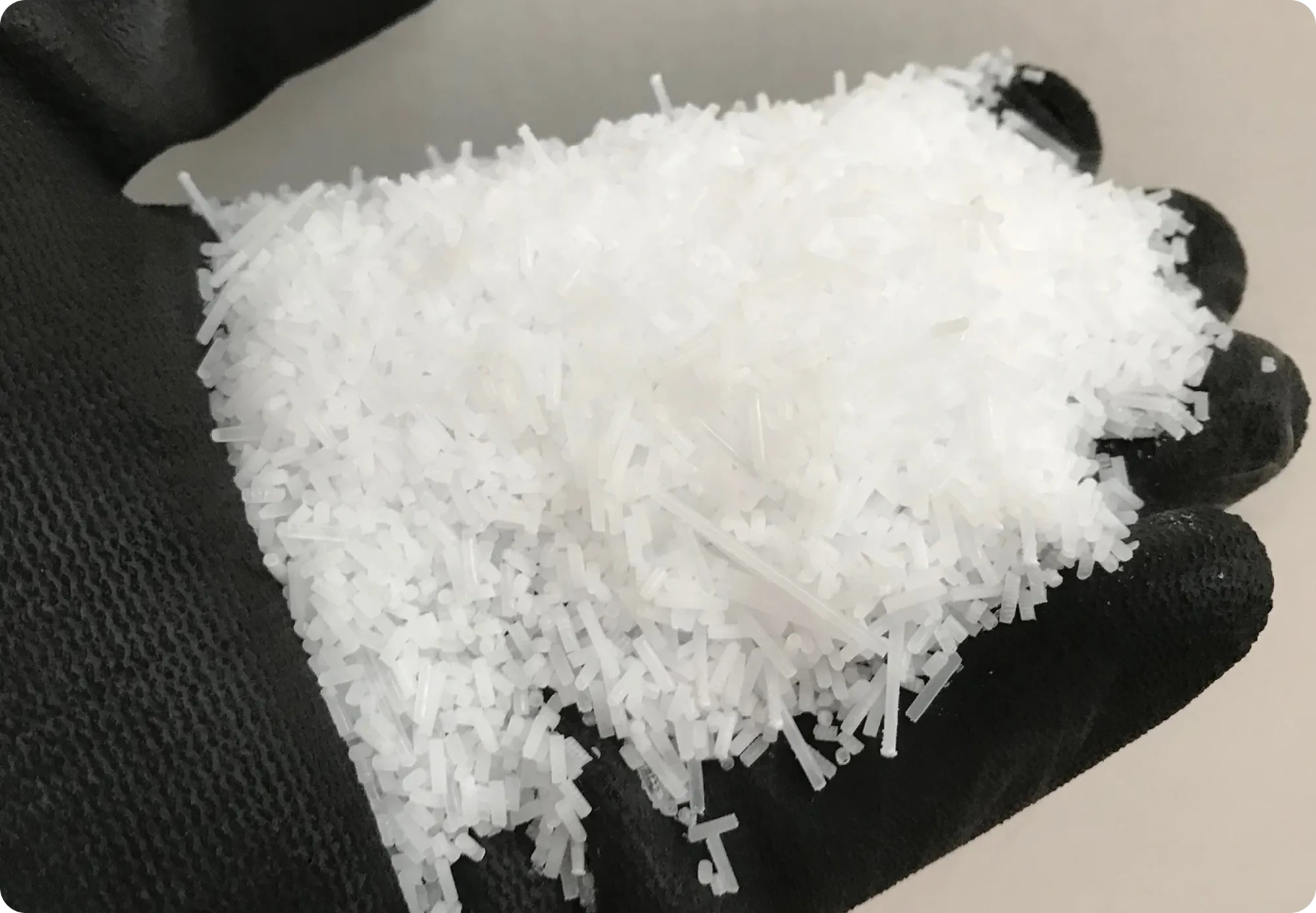
What is dry ice? A simple definition
Dry ice is solid carbon dioxide (CO₂) with a temperature of around -78.5 °C. It is made not of water but of pure CO₂, liquefied under high pressure and flash-frozen through expansion. As it warms up it sublimates — passing directly from the solid to the gaseous state without leaving any moisture behind.
Unlike conventional ice, dry ice is not made of water but of pure carbon dioxide (CO₂), which is liquefied under high pressure and then flash-frozen through expansion. For this reason, when it "thaws" it transitions directly from a solid to a gaseous state, without passing through a liquid phase. When the question comes up — "What is dry ice?" — most people probably first think of the characteristic white fog. But what onlookers actually see is simply what we call sublimation.
Properties of dry ice:
How cold is dry ice?
Dry ice has a temperature of approximately -78.5 °C. Unlike water ice it does not melt as it warms up but sublimates: it turns directly into gaseous CO₂ without a liquid phase, leaving neither moisture nor residue behind. Because of this extreme cold, direct skin contact should be avoided.
The characteristic white fog appears during sublimation. This extreme cold is exactly what makes dry ice so versatile — as a reliable cooling source just as much as in dry ice cleaning.
What is dry ice made of?
Dry ice consists of pure carbon dioxide (CO₂) — not water. The CO₂ is recovered as a by-product from industrial or natural sources, liquefied under high pressure and flash-frozen into solid dry ice through expansion. With a density of around 1.5 g/cm³ it is heavier than water, chemically stable and non-flammable.
How the gas becomes a solid pellet is covered in detail in the following section on production.
Dry ice: what is special about the way it is produced?
Production takes place in several stages, with the required carbon dioxide being recovered as a by-product from natural or industrial sources and then converted into solid form.
Key steps in production:
The final shape influences how quickly the material sublimates and how it can be stored or transported. At Dry Ice Energy you can primarily buy dry ice in pellet form, suitable for use with our machines. What is the right dry ice for your needs? We are happy to help.
- Recovery of CO₂: carbon dioxide is either obtained as a by-product of industrial processes such as fermentation and ammonia production, or extracted from natural sources. Impurities (e.g. water vapour, nitrogen, sulphur compounds) are removed through filtering and washing.
- Liquefaction: the recovered CO₂ is compressed in multi-stage piston or screw compressors to around 60 bar and cooled to temperatures below -56 °C, so that it is present in liquid form.
- Expansion and cooling: the liquid CO₂ is expanded under controlled conditions, which causes it to cool abruptly. What then happens is its conversion into snow-like, solid dry ice.
- Pressing: the dry-ice snow is pressed under high pressure into blocks, pellets or nuggets, which can then be used for a wide range of purposes.
A glimpse into the history of dry ice: what has happened so far
Anyone wanting to trace the development of solid carbon dioxide should first ask what dry ice was in the 19th century. The answer: a phenomenon. It was not until 1835 that it was discovered in France that liquid carbon dioxide instantly freezes into solid snow particles upon expansion. This was the first documented production of dry ice.
The start of commercialisation
It was only about 100 years later — in 1925 — that the American company "Prest Air Devices" began commercial production and marketing under the brand name "Dry Ice". More and more people became aware of what dry ice is. Applications emerged for cooling food, in medical technology and for dry ice cleaning on cars.
Today, in the 21st century, new and innovative applications keep emerging. Among them are the patented devices from Dry Ice Energy. They are used for highly efficient mould cleaning and industrial cleaning as well as for particularly delicate small parts. So whenever someone asks us "What is dry ice?", our answer is: "An indispensable material in many areas, continually being further developed to unlock new fields of use."
Application areas: what is dry ice used for?
Thanks to its remarkable properties, it didn't take long for researchers and developers to ask: what can be drawn from a substance like dry ice? Its versatility is reflected today in numerous fields of use. The question is rather what dry ice is not.
What's also interesting about dry ice is its potential for private use. Clean your vehicle yourself using a dry ice blasting device, for example, or treat your guests to spectacular party effects. On a camping trip it can serve as a reliable cooling source. Just make sure to avoid direct skin contact and to ventilate properly.
What is dry ice? An extraordinary material
Many people already benefit from this unique material with its versatile range of uses. A modern dry ice blasting device, in particular, offers immense advantages for countless industries. We provide the information so that soon no one needs to ask: what do you do with dry ice? Instead, more people should learn about its residue-free sublimation and environmentally friendly properties. Its production and applications have evolved over the years. With companies like Dry Ice Energy, this will continue to be the case. You now know — and have an answer to the question: what is dry ice?