
Automotive
Automotive
In body-in-white production, weld spatter, primer residue, and anti-corrosion wax must be fully removed before components enter the paint line. Dry ice cleans jigs, robot arms, and welding guns in place — without disassembly, without abrasives, without water entering hollow profiles.
- No chemicals or water
- Made in Germany
- Service across Europe
- Time saved
- 25–40 %
- Chemicals & water
- 0 %
- Sublimation
- −78 °C
- Made in Germany
- DE
Body-in-white, paint shop, and welding lines
Paint booths, electrostatic spray equipment, and paint-line conveyors can be cleaned residue-free with dry ice — no solvents, minimal downtime. The process is approved for robot surfaces in aluminium, steel, and composite materials.
EV battery production and electrical systems
Traction battery manufacturing requires cleanroom-compatible processes. Dry ice is non-conductive, leaves no particles and no residue — suitable for housings, busbars, electrical connections, and cell modules. The process is compatible with sensitive sensors and power electronics.
- Non-conductive — safe for busbars, cells, and power electronics
- No particle contamination — cleanroom-compatible
- Removes weld spatter, adhesive residue, and anti-corrosion coating before painting
- Clean paint booths and robots without disassembly
- Plastic injection tools in automotive supply: removing release agent and gas marks
- No water residue — no drying phase, no corrosion risk
See the difference
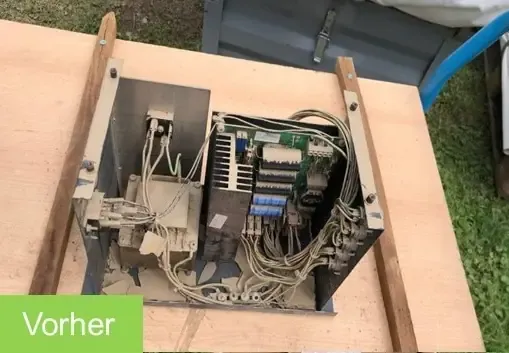
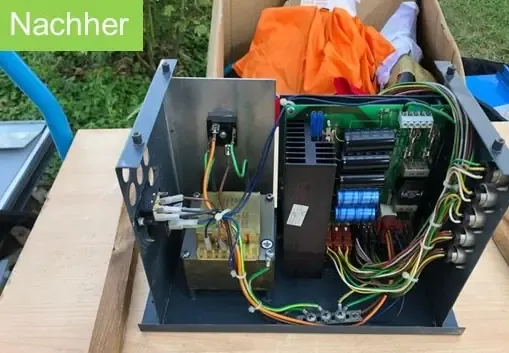
In action
Typical applications
Car interior (upholstery, plastics, vents)
- Air
- 200–600 l/min @ 3–5 bar
- Dry ice
- 4–8 kg/h
Car exterior (polish residue, wax)
- Air
- 250–450 l/min @ 3–5 bar
- Dry ice
- 2–5 kg/h
Engine bay cleaning
- Air
- 250–1000 l/min @ 4–7 bar
- Dry ice
- 5–11 kg/h
Undercarriage cleaning
- Air
- 1700–2500 l/min @ 7–10 bar
- Dry ice
- 14–23 kg/h
Wheels, wheel wells, chassis
- Air
- 600–1000 l/min @ 4–7 bar
- Dry ice
- 7–11 kg/h
Recommended machines
- Champ NeoUltra Portable
Ultra-portable backpack-style dry ice blaster. From just 250 l/min air — works with standard compressors.
View model - Champ BasicEntry Level
Compact entry-level model — ideal for vehicle interiors and low-consumption use cases.
View model - ChampPopular Choice
All-rounder for vehicle detailing and occasional industrial use.
View model - Champ TurboVersatile
Powerful machine for detailed vehicle work and mid-weight industrial cleaning.
View model - Champ VarioPro Flex
Flexible machine with adjustable ice output and built-in pressure regulator for professional use.
View model - Champ Turbo ProIndustrial Power
High-end industrial machine with extreme output and full feature set for heavy-duty applications.
View model
Frequently asked questions
- Yes — dry ice cleaning is one of the preferred methods for welding robots because it works without water, chemicals, or material removal. Spatter and weld residue can be removed during operation without damaging grippers or sensors.
- For line cleaning in automotive manufacturing we recommend the Champ Turbo Pro for stationary applications and the Champ Turbo for mobile maintenance tasks. Both deliver the blasting power needed for bodies, paint lines, and robots.
- A complete engine cleaning typically uses 3-8 kg of dry ice. Exact demand depends on contamination level, engine size, and desired result.
Is dry ice suitable for cleaning welding robots?
Which Champ model do you recommend for automotive manufacturing?
How much dry ice do I need for engine cleaning?
More industrial applications
Next step
Let's talk about your application.
Tell us briefly what you need to clean — we will recommend the right blaster and put together a no-obligation quote.