
Support
Support & Help Center
FAQs, manuals, datasheets, and explainer videos — everything you need.
Explainer videos
 DIE — How to useYouTube ↗
 The new Champ Vario — explainedYouTube ↗
 Dry Ice Energy — Champ Turbo dry ice blaster commissioningYouTube ↗
 Dry Ice Energy Showcase — Who We Are / A Day at the OfficeYouTube ↗
 DRY ICE | Introducing The BEAST — Dry Ice Energy's latest and greatestYouTube ↗
 How to clean WITHOUT water & chemicals — cleaning with dry ice by DRY ICE ENERGYYouTube ↗
 How to use the Champ Vario — the most compact dry ice blasting device on the marketYouTube ↗
 Keep your hose straightYouTube ↗
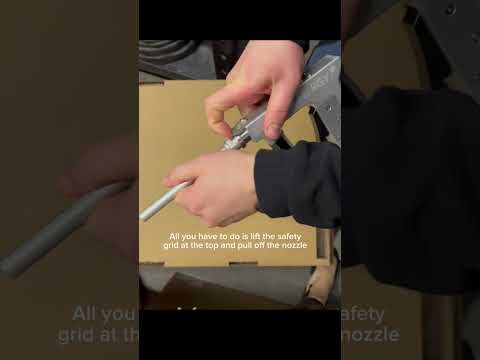 Nozzle changeYouTube ↗
 Nozzle unscrew — detailedYouTube ↗
 Nozzle unscrew — first glanceYouTube ↗
 Cleaning WITHOUT water & chemicals — dry ice cleaning with DRY ICE ENERGYYouTube ↗
 Safety clutchYouTube ↗
Manuals
Frequently asked questions
Top questions
How heavy are the machines, and are they easy to transport?
The lightweight, portable units from Dry Ice Energy allow cleaning operations to be carried out flexibly at different locations. Weighing less than 20 kg, our machines are significantly lighter and more mobile than many competing products, which often exceed 30 kg. This makes them particularly easy to transport and handle.
More on Cost & everyday use →How much dry ice do I need?
a. There is no blanket answer because it depends on many factors (degree of soiling, application, machine type, nozzle, compressed air, ice quality and pellet size, etc.). b. Example automotive detailing: interior 3-10 kg, engine cleaning 3-8 kg, underbody 30-80 kg. c. Example control-cabinet cleaning (80 cm x 2 m): approx. 1-2 kg. d. Example plastic mould cleaning (30 cm x 30 cm): approx. 0.2 kg.
More on Dry ice →Can I clean electronics with dry ice too?
a) Yes you can — you work without water, without chemicals and without electricity. You can even blast electronics while they are in operation.
More on Application →Does dry ice also remove sweat, grease and chalk (magnesium) residues?
Yes — grease, oils and chalk are loosened by the thermal shock and micro-explosion effect. Stains that have penetrated deeply or porous plastics can still push dry ice cleaning to its limits, so for uncertain surfaces we recommend a test patch to determine the correct nozzle and pressure.
More on FAQ about dry ice cleaning in the gym →Does dry ice cleaning in a medical supply store replace disinfection?
No — regular disinfection is still required. Dry ice cleaning can reduce the microbial load, but it does not replace the disinfection prescribed by your hygiene plan.
More on FAQ about dry ice cleaning in the medical supply store →Browse by topic
76 questions · 15 categories
- Dry ice8 questions
- Cost & everyday use9 questions
- FAQ about dry ice cleaning of the engine4 questions
- FAQ about dry ice cleaning in the gym6 questions
- FAQ about dry ice cleaning in the medical supply store5 questions
- Mould cleaning with dry ice blasting — FAQ4 questions
- Dry ice cleaning in rehabilitation technology5 questions
- FAQ about simulator cleaning5 questions
- FAQ removing adhesive residue5 questions
- FAQ cleaning upholstered chairs5 questions
- FAQ about industrial cleaning4 questions
- Application7 questions
- Technical4 questions
- General1 questions
- FAQ about dry ice blasters and compressors4 questions
Dry ice
How much dry ice do I need?
a. There is no blanket answer because it depends on many factors (degree of soiling, application, machine type, nozzle, compressed air, ice quality and pellet size, etc.). b. Example automotive detailing: interior 3-10 kg, engine cleaning 3-8 kg, underbody 30-80 kg. c. Example control-cabinet cleaning (80 cm x 2 m): approx. 1-2 kg. d. Example plastic mould cleaning (30 cm x 30 cm): approx. 0.2 kg.
Is dry ice dangerous?
a) Dry ice is fundamentally non-hazardous and non-toxic. Unlike other cleaning agents, dry ice even neutralises and removes bacteria and viruses from the surface. The following safety notes still apply: b) Dry ice has a temperature of -78.5 °C. Always wear gloves and safety glasses. Direct contact with unprotected skin causes serious frostbite. Never put it in your mouth. c) 0.5 kg of dry ice produces approx. 250 litres of CO₂ gas. Store only in non-airtight containers (e.g. our styrofoam boxes). d) Carbon dioxide is 1.5 times heavier than air. CO₂ gas spreads along the floor and collects in low areas. Never store dry ice in a poorly ventilated room (e.g. cellar, car). Ensure good ground-level ventilation. e) Carbon dioxide can cause loss of consciousness. CO₂ acts as a narcotic; above 5 % concentration in breathing air it causes unconsciousness, and higher concentrations can lead to suffocation.
How can I tell if dry ice is of good quality?
a) The whiter the dry ice, the better the quality — if the pellets look glassy, the quality is lower. b) Freshly produced dry ice can be very hard, so ideally it should already be 24 hours old.
What is dry ice?
a) Dry ice is solid carbon dioxide at a temperature of -78.5 °C. We offer it in pressed form as 3.0 mm or 1.5 mm pellets. b) Dry ice contains no water, is completely non-toxic and non-flammable. It is also non-conductive. It is ideal for dry ice blasting, as a coolant, or for fog effects at events. c) Dry ice is pure, solid carbon dioxide (CO₂) that sublimates (evaporates) directly from solid to gas without leaving any residue. The resulting gas is odourless, colourless and environmentally neutral.
Which dry ice pellet size should I ideally buy?
a) If available, 1.5 mm or 3.0 mm. b) If you are not based in Germany and cannot find either 1.5 mm or 3.0 mm, you can also use other sizes.
What are the advantages of dry ice?
a. Work without water or chemicals. b. Residue-free process. c. Time savings. d. Less labour-intensive. e. Non-conductive.
How long does dry ice last?
a. In our premium dry ice transport boxes (6 cm wall thickness), dry ice lasts up to 1 week. Expect daily sublimation losses of about 5-10 %. b. Using our dry ice storage boxes extends the shelf life by another 20-30 %.
Where can I get dry ice?
a. Dry ice is available worldwide; we also produce premium dry ice in Germany. You can order directly from us or find a dry ice supplier in your country. https://dryiceenergy.com/produkt-kategorie/trockeneis/
Cost & everyday use
How heavy are the machines, and are they easy to transport?
The lightweight, portable units from Dry Ice Energy allow cleaning operations to be carried out flexibly at different locations. Weighing less than 20 kg, our machines are significantly lighter and more mobile than many competing products, which often exceed 30 kg. This makes them particularly easy to transport and handle.
How much time do I save compared to wet cleaning?
Because cleaned surfaces are dry immediately, waiting times are eliminated. The total cleaning time is reduced by up to 40 %.
What does a machine cost, and is it worth the investment?
Dry Ice Energy units offer an outstanding price-to-performance ratio. Despite their high cleaning performance they are an affordable investment, making them suitable even for smaller facilities. Prices start at 6,999 euros, which keeps them accessible for smaller practices and rehabilitation centres. The advantage becomes even more obvious when comparing our dry ice blasting units to professional wheelchair washing systems: at around 30,000 euros these systems are so expensive that you could buy a small fleet of our blasters for the same money.
Do I need chemicals, and what running costs are involved?
The process works entirely without chemical cleaning agents. That saves running costs — no expensive chemicals to reorder — and protects the environment. Without chemical residues, skin irritations for users are minimised and strict regulations no longer apply, which considerably simplifies the cleaning process.
Can I clean sensitive electronics with it?
Yes. Dry ice cleaning is also suitable for the gentle cleaning of sensitive electronic components. Because the process is dry, neither moisture nor chemical residues can damage the electronics.
Do the aids need to dry after cleaning?
Because dry ice replaces water, drying times disappear entirely. Rehabilitation aids are ready for use again immediately after cleaning, which significantly improves efficiency in the facility. This rapid turnaround is especially valuable in day-to-day practice.
Does the cleaning harm wheelchairs and other aids?
Without water, wheelchairs and other rehabilitation aids are not damaged. Dry ice cleaning prevents corrosion and other water damage that conventional methods can cause, and extends the equipment's service life.
Which rehabilitation aids can I clean?
The versatility of the technology makes it possible to clean nearly any rehabilitation aid, both mechanical and electronic devices, ensuring comprehensive care.
Is there any residue left after cleaning?
No. Dry ice cleaning is particularly thorough yet gentle and leaves no residue behind. This applies to both the loosened dirt and the dry ice itself, which sublimates completely. As a result, cleaned equipment can be used again immediately, without any follow-up cleaning. Dry ice cleaning leaves neither moisture nor chemical residue, sustainably improving hygiene and user safety.
FAQ about dry ice cleaning of the engine
Is there a risk to the electronics when cleaning the engine with dry ice?
No. Because the method is contactless and dry, sensors, connectors and cables are not affected. To be on the safe side it is still advisable to cover sensitive components.
Does dry ice engine cleaning produce moisture?
No, because the CO₂ sublimates directly from solid to gas. No moisture or cleaning agents remain, so there is no need to dry the engine afterwards.
Is dry ice engine cleaning economically worthwhile?
Yes — workshops in particular benefit from shorter cleaning times and lower labour. Service quality goes up, so a Dry Ice Energy unit pays for itself in a short time.
Can dry ice engine cleaning be done outdoors?
Yes — Dry Ice Energy units are mobile. In good weather you can work outdoors. Whatever the location, you should ensure good ventilation and a clean surface so that residues can be removed easily.
FAQ about dry ice cleaning in the gym
Does dry ice also remove sweat, grease and chalk (magnesium) residues?
Yes — grease, oils and chalk are loosened by the thermal shock and micro-explosion effect. Stains that have penetrated deeply or porous plastics can still push dry ice cleaning to its limits, so for uncertain surfaces we recommend a test patch to determine the correct nozzle and pressure.
Does dry ice cleaning replace daily disinfection?
No — daily disinfection is still necessary. Dry ice cleaning is a complementary measure that removes deep-seated dirt and germs that the daily routine cannot reach.
Is dry ice cleaning in a gym financially worthwhile?
Yes — gentle cleaning extends the service life of the equipment, while at the same time saving time and staff costs because the process is faster and more effective.
Is dry ice cleaning safe?
Yes. The CO₂ we use is a natural product, requires no chemicals and produces no wastewater with hazardous fumes, which also makes it environmentally friendly. PPE such as safety glasses and gloves is still essential because of the very low temperatures.
Do machines need to be disassembled for dry ice cleaning?
No — hard-to-reach areas can generally be cleaned without time-consuming disassembly. This saves time and money so the equipment is back in service faster.
What are the advantages of dry ice cleaning compared with steam or sand blasting?
Sand blasting is effective on coarse surfaces but abrasive. Steam blasting works wet and therefore introduces drying times. Dry ice cleaning, by contrast, is non-abrasive, leaves no residue and requires no disassembly. Especially in gyms, where hygiene, material protection and short downtimes matter, it is the better alternative.
FAQ about dry ice cleaning in the medical supply store
Does dry ice cleaning in a medical supply store replace disinfection?
No — regular disinfection is still required. Dry ice cleaning can reduce the microbial load, but it does not replace the disinfection prescribed by your hygiene plan.
Does dry ice cleaning damage orthopaedic equipment?
No — the process is non-abrasive. The CO₂ pellets are not sharp-edged and sublimate immediately on impact, so dirt is lifted off rather than ground off. Damage only occurs with poorly adhering coatings or incorrect application.
What do I need to keep in mind during dry ice cleaning?
Make sure there is adequate ventilation. Because dry ice involves very low temperatures, suitable PPE — safety glasses, hearing protection, gloves and sturdy footwear — is also important. When cleaning electronics, switch off the power beforehand and choose distance and pressure carefully.
What does a dry ice cleaning session in a medical supply store look like?
There are five steps: Setup — prepare the machine, hoses, nozzles and dry ice. Choose nozzle and pressure — low pressure for sensitive parts, high pressure for robust surfaces. Distance and angle — keep 30-80 mm distance and a shallow angle to remove dirt in a controlled way. Blasting — clean the surfaces in even, overlapping strokes. Finish — vacuum up the dirt on the floor, with no drying time required.
What is dry ice cleaning suitable for in orthopaedic technology?
The process is suitable for a range of materials and surfaces. For example, plastics can be cleaned of adhesive residues, and PCB housings on control panels can also be cleaned. Cushions and covers can also be freed of deposits and odours.
Mould cleaning with dry ice blasting — FAQ
How long does a typical mould cleaning with dry ice blasters take?
Cleaning time depends on the size of the mould and the degree of soiling. Small to medium moulds typically take only a few minutes. Because the process is fast and effective, production downtime is kept to a minimum. Several of our machines also let you adjust blasting pressure and dry ice flow to optimise cleaning time further.
What maintenance do dry ice blasters need?
Our units are robust and low-maintenance. You only need to clean the nozzles regularly and check the pressure system. Depending on how often you use the machine, we recommend professional servicing at fixed intervals to keep performance at its best. In addition to dry ice machines for mould cleaning, Dry Ice Energy offers a comprehensive service package: once the 1-year warranty expires, you can add an extended warranty for just 399 € per year.
How much dry ice is needed for one cleaning?
Consumption varies with the size of the mould and the level of soiling. On average, a smaller job uses less dry ice than heavily soiled or large-area moulds. Because our machines can be regulated very precisely, you can tune dry ice consumption for your mould cleaning and clean cost-effectively.
How is dry ice cleaning rated in terms of occupational safety?
Working with the ultra-compact dry ice blasters from Dry Ice Energy is safe to deploy. A professional briefing from our experts gets your team properly prepared. We recommend wearing gloves and safety glasses and ventilating regularly. Direct contact with dry ice — which is around -80 °C — should be avoided. Dry Ice Energy provides safety data sheets for companies and shares them, along with further tips, in a digital help centre.
Dry ice cleaning in rehabilitation technology
Does dry ice cleaning shorten cleaning times?
Yes. Cleaned surfaces are dry immediately, so waiting times disappear — the total cleaning time drops by up to 40 %.
What does a machine for rehabilitation technology cost?
Our machines start at 6,999 euros, keeping them within reach of smaller practices and rehabilitation centres. For comparison, professional wheelchair washing systems cost around 30,000 euros — enough to buy a small fleet of our blasters. And because no chemical additives are needed, day-to-day operation stays largely cost-neutral.
Are the machines easy to transport?
Yes. At under 20 kg, our machines are noticeably lighter and more mobile than many competing products that often weigh over 30 kg — so they can be used flexibly at different locations.
Does the cleaning leave residues on rehabilitation equipment?
No. The clean is thorough yet gentle; neither dirt residue nor moisture is left behind, as the dry ice sublimates completely. Equipment is ready for use again immediately, with no follow-up cleaning.
Do rehabilitation devices have to dry after use?
No. Because dry ice replaces water, there are no drying times — the aids are ready for use again right away. The process is also suitable for sensitive electronic components.
FAQ about simulator cleaning
Is cleaning a racing cockpit with dry ice better than with compressed air?
Yes. Compressed air only stirs up dirt and redistributes it across the equipment. Dry ice removes particles completely and loosens grease, dust and deposits — without damaging the surface.
Can the electronics of simulators be cleaned too?
Yes — dry ice is non-conductive and produces no moisture, so electronic components can be cleaned safely and without damage.
Can VR headsets and simulator monitors also be cleaned with dry ice?
Never blast directly onto the screen. Frames, mounts, ventilation slots and cables can be cleaned without any problem, keeping the hardware hygienic and dust-free without putting electronics or coatings at risk.
How often should racing simulators be cleaned?
Private users normally need a clean every four to six months. In professional environments — racing teams, VR centres or eSports lounges — a monthly clean is recommended to maintain hygiene, precision and functionality.
Does cleaning a racing simulator with dry ice also remove sweat and skin oils?
Yes. Steering wheels, grips and belts accumulate deposits of skin oil, sweat and dust. Dry ice removes them hygienically and odour-free, without drying out or damaging the surface — so it can be used on synthetic leather, Alcantara or carbon.
FAQ removing adhesive residue
Is dry ice cleaning suitable for removing adhesive residue from untreated wood?
In principle yes, but the blasting intensity should be reduced. This ensures that the wood grain is preserved and the cleaning stays gentle and precise.
Is removing adhesive residue with dry ice safe for your health?
Yes. No toxic fumes or residues are produced because dry ice is non-toxic. It is nevertheless recommended to use the method only in well-ventilated rooms or outdoors.
Can dry ice remove any type of adhesive residue?
Yes, almost all common adhesives can be removed with dry ice. Both industrial adhesives and label adhesives pose no problem. Only with extremely thick layers can a pre-treatment before dry ice cleaning be useful.
Are surfaces damaged when removing adhesive residue from wood with dry ice?
No. Dry ice cleaning is non-abrasive, so surfaces remain intact. Even sensitive materials such as paint or plastic can be cleaned efficiently.
How does cleaning solid wood differ from veneered wood when removing adhesive?
Solid wood tolerates higher pressure, while veneered surfaces are more sensitive. For veneer we recommend a fine, even jet so the veneer is not lifted off.
FAQ cleaning upholstered chairs
Is cleaning an upholstered chair with dry ice environmentally friendly?
Yes — dry ice cleaning uses no water, no wastewater and no chemicals. The CO₂ is recovered from industrial by-products that would arise anyway; it is recycled rather than newly produced, forming a closed loop with very low environmental impact. The method also reduces energy use because no drying or follow-up cleaning is required.
Can any fabric chair be cleaned with dry ice?
Yes — almost any upholstery material is suitable. Fabric, velour, microfibre or leather: dry ice cleaning is non-abrasive and gentle on materials. Because no cleaning agents are used, there is no risk of discoloration or fabric damage.
How long does chair cleaning take?
It depends on the number of chairs and the degree of soiling. A single chair can be cleaned in a few minutes; cleaning an entire restaurant takes around one working day. Because no drying times are required, the chairs are ready to use again immediately afterwards.
How often should an upholstered chair be cleaned?
It depends heavily on usage. In a private home, once a year is usually sufficient. In high-traffic settings such as restaurants, a quarterly or half-yearly clean is advisable. Regular care not only prevents staining but also stops dirt from penetrating deep into the fibres.
How are deep-seated stains removed when cleaning upholstered chairs?
Older stains have already worked their way deep into the fibres and cannot be removed with household remedies. Dry ice cleaning combines mechanical and thermal action: dirt particles contract from the cold, break away from the surface, and are then carried off by the air pressure. This gently removes crusted residues and grease deposits.
FAQ about industrial cleaning
Can industrial cleaning also be used in sensitive areas?
Yes — dry ice industrial cleaning can be used in sensitive industries and areas. Control cabinets and sensitive electronic equipment, for example, can be cleaned because no moisture is involved that could cause short circuits or damage surfaces.
What are the advantages of industrial cleaning from Dry Ice Energy?
Because we work with dry ice, you benefit from several advantages: our method is chemical-free, leaves no residue and requires no piece-by-piece disassembly, which reduces downtime. The process is also more sustainable than the alternatives because no toxic chemicals are needed.
How does industrial dry ice cleaning work?
Dry ice cleaning is a process in which small pellets of frozen CO₂ are blasted at high speed onto soiled surfaces. The pellets sublimate on impact and effectively remove contaminants without damage or residue.
How safe is industrial dry ice cleaning?
Dry ice cleaning is an extremely safe process because no hazardous chemicals are used and no harmful fumes are released. It still makes sense to wear protective equipment such as gloves and safety glasses to avoid direct contact with the very cold dry ice.
Application
Can I clean electronics with dry ice too?
a) Yes you can — you work without water, without chemicals and without electricity. You can even blast electronics while they are in operation.
Can I clean machines and plant equipment while they are running, without issues?
a) Yes — because the process uses no water, no chemicals and no electricity, you save a lot of time and money.
How much pressure should I use inside a car?
a) 4-6 bar
What do I need to do differently if pellets coming out of the machine are too big?
a) First try the back-blast procedure. b) Check (if fitted) that the grinder is correctly installed. c) If problems persist, contact us directly: info@dryiceenergy.com
What should I do if not enough ice is coming out?
a) First try the back-blast procedure. b) Check whether there is enough ice in the hopper.
How can I blast abrasively? Will it also remove rust?
a) You can add glass beads or walnut shells. b) Mix in a ratio of 3 scoops of ice to 1 scoop of abrasive. c) Glass beads: 100-200 μm; walnut shells: 0.45-0.80 mm.
Where do the dirt particles end up?
a. The contamination is embrittled by the specific properties of dry ice and lifted off the surface. After cleaning, no dry ice residues remain because they sublimate completely. Only the loosened, dry dirt particles are left (no secondary contamination) — they can simply be disposed of.
Technical
Is a compressor with 10 bar of pressure enough?
a. The compressor's maximum pressure is not the only deciding factor — the effective delivery in litres per minute is what really determines the compressor's performance and therefore the blasting performance of the dry ice machine.
What should I do with the machine after use? How do I clean it?
a) Use the back-blast to blow out any remaining ice. b) Open the lid and leave the machine open.
How much compressor capacity do I need?
a. Depending on the application, our machines need between 250 and 1500 l/min. b. For most applications we recommend 400 to 1000 l/min. c. Plus a compressed air receiver tank of 100 l or larger to buffer the air supply.
What are the advantages of Dry Ice Energy's blasting machines?
a. No electricity required. b. Maintenance-free. c. Compact and mobile thanks to low weight. d. No electrical safety inspection required. e. Made in Germany (developed and patented, produced in-house). f. Configurable options. g. Abrasive blasting possible. h. Uniquely simple to operate. i. Ready to use immediately (plug and play). j. Wide performance range.
General
What can you clean with dry ice?
a. The range of applications is virtually unlimited. Because our machines work non-abrasively, almost any surface can be cleaned. b. Our core competencies are: i) automotive detailing, ii) the plastics industry (mould and tool cleaning), iii) machine maintenance, iv) hospitality and food service, v) and many, many more.
FAQ about dry ice blasters and compressors
What kind of maintenance does a compressor for dry ice blasters need?
Even with low-maintenance compressors, regular care is essential. Carefully check the following: oil level (on oil-lubricated models), replacement of intake and oil filters, draining the condensate from the tank, and inspecting the seals. As a rule of thumb, service work should be carried out every 500 to 1000 operating hours.
What operating environment is suitable for a dry ice blaster compressor?
Compressors work most efficiently in a well-ventilated room at temperatures between +5 °C and +35 °C. Avoid exposing the compressor to dust, oil mist or aggressive vapours such as solvents. If the compressor is used outdoors, we additionally recommend a weatherproof enclosure.
What role do the blaster and the compressor play in dry ice consumption?
A powerful compressor increases the intensity of the jet at the same ice consumption. Cleaning cycles also become shorter thanks to regulated compressed air. The ice is used more efficiently, which reduces incomplete sublimation and the unnecessary operating costs that come with it.
How loud is a compressor for dry ice blasters?
The noise level depends heavily on the type of compressor. A screw compressor, for example, is usually significantly quieter than a piston compressor. You can find the dB value in the relevant compressor's product sheet.
Next step
Let's talk about your application.
Tell us briefly what you need to clean — we will recommend the right blaster and put together a no-obligation quote.