
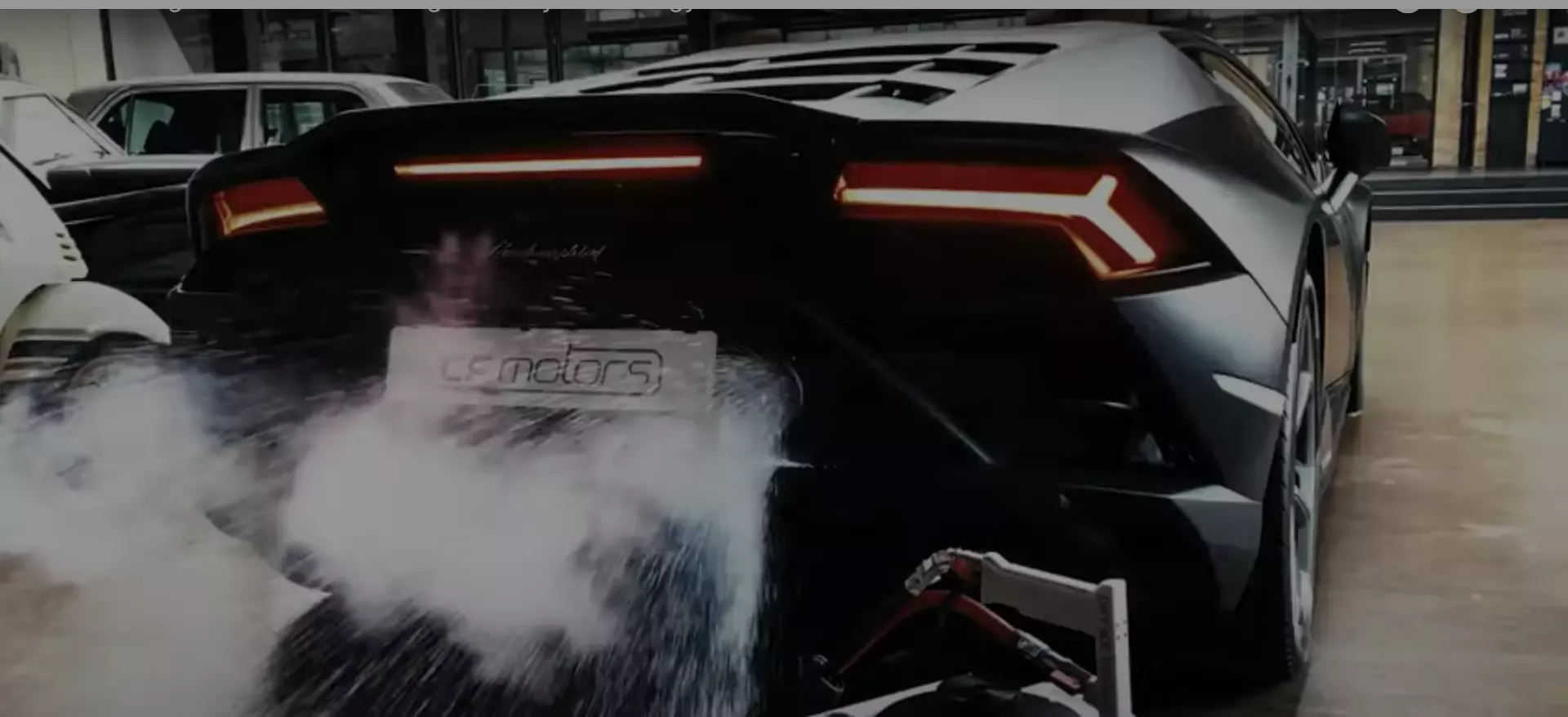
Car cleaning without water — dry ice as an alternative
In this article you'll learn how to wash your car without water, which methods are available, and why waterless car washing pays off in the long term.
Why clean without water in the first place?
Conventional car washing uses a lot — above all water. Depending on the method and location, between 100 and 600 litres of water are used for each vehicle wash. Add to that detergents, energy consumption and often a problematic wastewater disposal. That is neither sustainable nor efficient — and during dry periods or in regions with water scarcity it is becoming ever more critical.
Car cleaning without water therefore takes a different approach: instead of working with liquid, specialised cleaning methods are used to clean the vehicle dry and residue-free. This reduces water consumption to zero and at the same time makes cleaning more flexible and often gentler.
Cleaning a car without water — what methods are available?
There are various options for cleaning a car without water. Depending on the use case, level of soiling and desired result, different techniques make sense:
1. Dry ice cleaning
Dry ice cleaning for cars is based on a physical process using solid carbon dioxide (CO₂), cooled to -78.5 °C. This dry ice is blasted onto the surface to be cleaned in the form of small pellets with compressed air — typically between 4 and 10 bar.
The cleaning process relies on three central effects:
Dry ice is non-abrasive, meaning it does not grind down the surface. The process is therefore also suitable for delicate materials — provided that pressure and distance are correctly set.
Cleaning with dry ice requires a specially designed device that doses dry ice pellets and atomises them with compressed air. The device is controlled via a nozzle, which can have different attachments or angles depending on the application. The cleaning process is quiet, dry and leaves behind no moisture or cleaning chemicals.
Tip: make sure you buy high-quality dry ice and choose the right compressors for the dry ice blasting devices!
- Thermal effect: when the ice-cold pellets hit the dirt, a temperature shock occurs. This causes the dirt layer to contract and detach from the surface.
- Mechanical effect: the pellets hit the surface at high speed and generate a micro-impulse that loosens and removes particles — without grinding or scrubbing.
- Sublimation: immediately after impact, the dry ice converts from solid to gaseous state. Its volume expands abruptly, which additionally contributes to dirt detachment. At the same time, no residues are left behind as with liquids.
2. Microfibre cleaning with waterless cleaners
Another method is the application of special waterless cleaning agents in combination with microfibre cloths. A spray is applied to the soiled surface, binding and loosening the dirt. It is then wiped off with a clean cloth.
This technique is best suited to lightly soiled vehicles and to private use. Compared to dry ice cleaning, however, it is significantly more labour-intensive and less thorough — especially for stubborn or deeply embedded contamination.
3. Dry cleaning with compressed air and brushes
Especially for dust or dry dirt — for example after a longer standstill — a combination of compressed air and soft brushes can be useful. However, this method is not suitable for heavy soiling and should rather be seen as an interim solution.
What can be cleaned with waterless car cleaning?
Waterless car cleaning is by no means limited to the body. The applications for dry ice blasting devices are varied:
Particularly when cleaning paintwork without water, it becomes clear how gentle these methods are: no scratches from hard brushes, no limescale spots, no residues — and in some cases even a slight sealing effect from caring ingredients in the cleaning agent.
- Exterior surfaces: paint, glass, plastic parts — particularly beneficial for sensitive paintwork.
- Rims and tyres: removal of brake dust and road grime.
- Engine bay: removal of oil residues and contaminants without water damage.
- Interior: cleaning of dashboards, seats, fabrics and air vents — dry and hygienic.
Top 5 advantages of car cleaning without water
The reasons why more and more people wash their car without water are diverse:
1. Environmental friendliness
No water consumption, no wastewater, no chemicals: car cleaning without water is an active contribution to environmental protection — particularly at a time when the mindful use of resources is becoming ever more important.
2. Flexibility
Whether at home, on the road or in a car park — a waterless car wash works almost anywhere. No water connection, no drains and no special permits are required.
3. Time saving
Anyone who wants to clean their car without water saves not only the trip to the car wash but also long waiting times, drying times or removing water spots.
4. Gentle on materials
Modern waterless cleaning techniques are often kinder to paint, plastic and rubber. There is no mechanical friction from brushes or sponges — which is particularly important for sensitive surfaces.
5. Cost savings
In the long term, switching to waterless cleaning can also pay off financially — especially for vehicle fleets, car-sharing operators or service companies. Less consumption, less effort, less infrastructure.
Who is waterless car washing suitable for?
The target group is broad — and growing steadily:
Waterless cleaning offers a flexible, material-friendly and ecologically sensible solution in all these areas — regardless of the location or the type of object to be cleaned.
- Car dealerships and workshops looking to prepare their vehicles efficiently.
- Fleet operators or car-sharing providers cleaning many vehicles daily.
- Classic car owners who want to treat sensitive vehicles particularly gently.
- Medical equipment dealers and sanitary suppliers who need to clean medical aids or vehicles hygienically.
- The textile industry, for example for machine and surface cleaning.
- The plastics industry, particularly for the cleaning of tools, moulds or production lines.
Car cleaning without water — a modern solution for people, vehicles and the environment!
Car cleaning without water is a contemporary answer to ecological and practical challenges in everyday life. Whether for private individuals or companies: cleaning the car without water conserves resources, saves time and enables gentle, effective care for the widest variety of vehicle types.
A particularly efficient method here is dry ice cleaning from Dry Ice Energy. With mobile, powerful devices from our product range, contaminants are removed residue-free and gently. Especially for professionals or sustainability-conscious users, a real game-changer.
Would you like to learn more about car cleaning without water? We have partners all over the world ready to provide you with a free consultation!